New Dimensions interview by Michael Toms with Danah Zohar
Program no. 2508, 1994.
https://programs.newdimensions.org/products/quantum-consciousness-with-danah-zohar
[posted with permission, New Dimensions]
...
Danah: I think we're missing something very critical. We now know that the brain is capable of doing three kinds of thinking. One is logical, rational thinking and serial computers duplicate that very well.
Another is associative thinking, you know linking if I feel hungry I think of an apple, or if I see you I think of a friendly person and in fact of Father Christmas 'cause you look a bit like him. So we associate ideas. Now the new parallel processing computers can do this very well. This is neural network theory and how it's related to parallel processing.
Now Artificial Intelligence and the computer lobbies, say that's all there is to consciousness because that's all they can account for with their machines. But we know in fact from our own intuition and experience, and experience of ourselves, and others, that we can also do creative thinking. Human beings come up with new concepts, come up with new categories, come up with new associations. We're constantly reinventing the scenario.
Now this I put down to quantum processes in the brain and this is something that existing computers cannot duplicate. I leave it open that if we one day invent a quantum computer it might be able to, but our existing serial and parallel computers cannot duplicate creativity, new thinking, new ideas and in fact conscious experience. Computers aren't conscious. They don't have a sense of humor, they don't have the sense of sorrow, and they don't relate the way we do. They can only do what's programmed into them.
Michael: Also, it seems to me that, just as you were talking about coming up with the idea of the book out of your anesthetized state, and coming up with insights through the dream process that somehow our consciousness is not just isolated to the brain. It seems that we're somehow in touch with a larger reality and that certainly would be comparable to ... the quantum model, wouldn't it?
Danah: Well I think this is one of THE most exciting things about the quantum model of consciousness because it actually begins to talk about the sort of origins and the modern nature of consciousness, well beyond the human brain.
Quantum physicists describe something they call the quantum vacuum. The vacuum is very badly named because it isn't empty. It's actually a sea of potential, replete with all possibility.
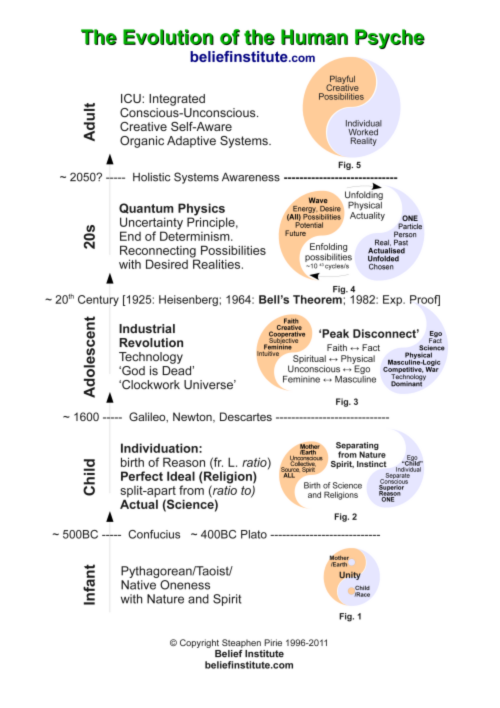 Given current world circumstances (e.g. the 2008 global economic situation; recent and current controversies in the USA over the teaching of "Intelligent Design" and recent demonstrations against cartoons and books that are deemed blasphemous) perhaps it's timely that we gain a fuller perspective. It is quite evident there are conflicting views on what is "Truth."
 "The Dynamics of Gender and Life" ebook is now available at
  "Remember this, that very little is needed to make a happy life."